Research Groups Collaborating Core Facilities

Optical Imaging Facility

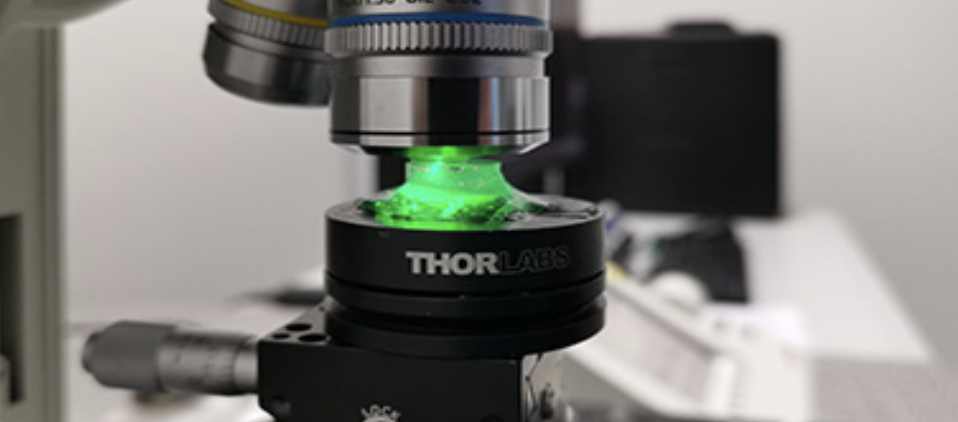
As one of the core facilities of Chinese Institute for Brain Research (CIBR), Beijing, the Imaging Facility is mainly responsible for the maintenance of optical imaging equipment, training, experimental services and the development of some new optical imaging technologies and methods. At present, Imaging Facility is equipped with Upright Laser Confocal Scanning Confocal Microscopes, Inverted Laser Confocal Scanning Confocal Microscope, Virtual Slide Microscope, Light Sheet Microscope, Two-photon Excitation Microscope, High-Throughput Cellular Screening System, Dual-disk Laser Confocal High-Content Screening System, and some other sets of equipment, which are capable to satisfy the needs of construction of the whole brain atlas, in vivo imaging, living cell imaging and high-throughput biological screening. Meanwhile, Imaging Facility staff is willing to assist in the design of a more reasonable and effective imaging scheme to obtain high-quality data and technical support for each laboratory of CIBR.
MORE >


Genomics Center

The goal of Genomics Center is to establish an integrated platform to provide CIBR with both experimental and data analysis services, including conceptual design, sample preparation, sequencing library construction and bioinformatics data analysis. We aim to provide CIBR with long-term stable and high quality services. Recently, we focus on the development of single cell sequencing technologies. Our team will continuously improve our services to facilitate brain science research and bridge the gap between basic research and medical resources.
MORE >

Vector Core

Vector engineering center is responsible for providing technical support and services related to viral vectors for researchers of Beijing brain science and brain like research center.The experimental area of vector engineering center covers a total area of about 200m2, equipped with two secondary biosafety laboratories (BSL-2) for virus production, one conventional BSL-1 Laboratory for molecular cloning, vector transformation and other tests, one instrument room for ultracentrifugation, one simple darkroom for conventional fluorescence imaging, which can be used for construction, transformation, packaging, purification, concentration and testing of common virus vectors Set of technical process.The vector engineering center has the capacity to transform and produce a variety of virus vectors, including a variety of serotype rAAV vectors, lentivirus vectors and retrovirus vectors. It is about to introduce rabies virus (rvdg) and herpesvirus (hsv-1-h129) tracking system, and more kinds of virus tools will be introduced or developed in the later stage. Vector engineering center provides a variety of virus carrier services for laboratories of Beijing brain center, such as pre packaging of common virus carriers, packaging of virus carriers on demand, building personalized virus carriers on demand, research and development / screening of new virus carriers, etc.In addition to the virus vector service, the vector engineering center is also committed to establishing / maintaining the common experimental material sharing library of Beijing brain center, responsible for the preservation / management / sharing of common plasmids and cells, and open to all members of Beijing brain center. In order to improve the efficiency of equipment and instruments, the carrier Engineering Center also provides services such as sharing of large-scale instruments and common instruments, sharing of conventional test space and BSL-2 experimental space, and emergency supply of common reagents.
MORE >

Instrumentation Core

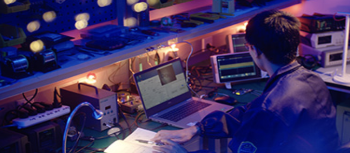
The advance in instrument technology will promote brain science study. As one of the core facilities of the Chinese Institute for Brain Research, Beijing (CIBR, Beijing), the Instrumentation Core mainly focuses on the design, generation, and fabrication of novel electronic, optical, and mechanical devices, as well as software interfaces for cutting-edge research in neuroscience. At present, the Instrumentation Core contains seven function workbenches: circuit soldering workbench, software development and test workbench, 3D printing workbench, micro assembly workbench, electronic test workbench, machining workbench and optical test bench. The services of Instrumentation Core include technical research and device development, instrument modification support, equipment training and borrowing, instrument maintenance, technology consulting and material sample support. The Instrumentation Core also supports clinical technology research and devices development for brain disease diagnosis and treatment.
MORE >

Computing and Data Science Core

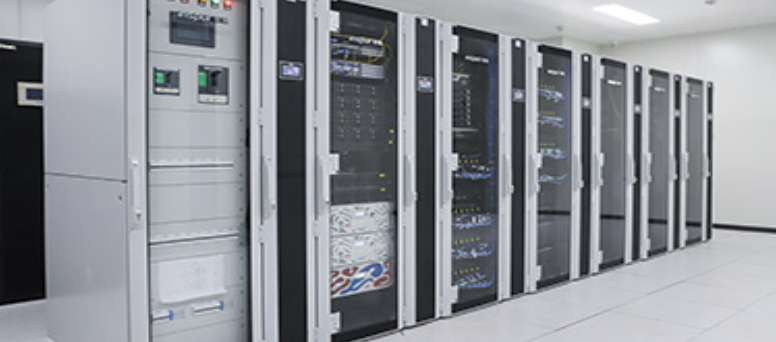
High-performance computing (HPC) power is an important supporting condition for brain science research. The HPC Core Facility undertakes the tasks of building a common HPC platform and related databases, and is responsible for supporting work in several research areas such as brain-computer interface, brain atlas, cognitive impairment-related diseases, brain-like computing and brain-computer intelligence, brain development of children and adolescents, and analysis of brain cognitive principles. The HPC Core Facility maintains a large-scale data storage and processing platform, including high-performance storage, high-performance computing, data sharing, and visualization functions, and provides services and training, such as artificial intelligence algorithm development, informatization construction, and network management. The platform provides 24/7 high-performance computing and data processing services to CIBR. The HPC cluster uses a GPU + CPU heterogeneous system, with nearly 400 trillion calculations per second. It can meet the traditional CPU computing requirements, and accomplish large-scale brain image processing and analysis, helping researchers to visualize massive data and study artificial intelligence. Through 3.1P capacity high-performance storage system, the measured aggregate read and write bandwidth of up to 40GB/s is achieved, which meets the needs of huge amounts of data storage and high-throughput data transmission in the field of brain science.
MORE >

Laboratory Animal Resource Center

Laboratory Animal Resource Center
MORE >

Behavior analysis center

The Behavior Analysis Center is one of the auxiliary platforms of the Beijing Institute of Brain Science and Brain Creation (CIBR). It is committed to providing technical support for behavioral detection and analysis to the Brain Institute laboratory, and combining it with the latest research progress in behavioral phenotyping analysis to fully Use advanced technologies such as artificial intelligence to build a large-scale, automated, and standardized behavioral monitoring, recording, and analysis platform.
MORE >

Genetic Manipulation Core

In neuroscience, genetic analysis is essential for targeting individual neuron types and revealing the neural circuit basis of behavior. As one of the core facilities of the Chinese Institute for Brain Research (CIBR), the Genetic Manipulation Core is mainly responsible for generating gene-edited model animals.
MORE >

Biological Mass Spectrometry Center

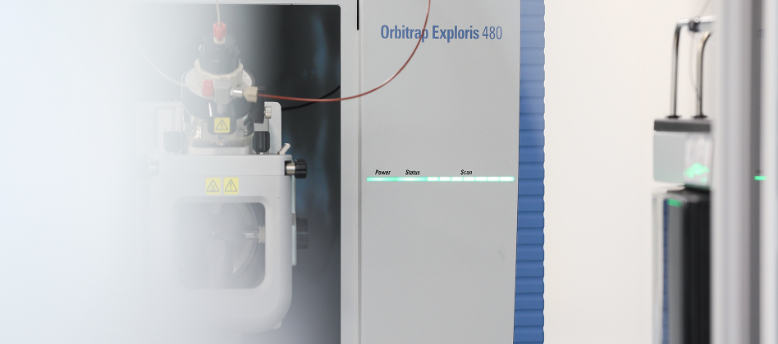
Biological Mass Spectrometry Center (BMSC) provides mass spectrometry, chromatography, and analytical chemistry related technical services to all research groups and core facilities at CIBR.
MORE >

Medicinal chemistry center

MCC provides in-depth knowledge of modern concepts in drug discovery and medicinal chemistry technology, including structure-activity relationships (SAR) of CNS bioactive molecules, rational CNS drug design and evaluation, and the preclinical and early clinical drug discovery process, which includes target identification, hit and lead optimization, candidate selection, preclinical development, and Phase I clinical studies planning. MCC also covers modern concepts in drug discovery, such as property- and structure-based drug design, fragment-based drug discovery, in silico methods, and ADME-T principles.
MORE >

Nanofabrication Center

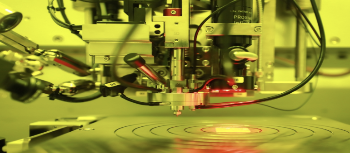
Nanofabrication Center is a state-of-the-art research support platform jointly established by NEUCYBER and Chinese Institute for Brain Research, Beijing. It aims to provide micro-nano processing technology support for research and production activities of both institutes. The Nanofab Center is not only an incubator for nanotechnological innovation but also an important foundation for the development of neuroscience and brain-computer interface research.
MORE >