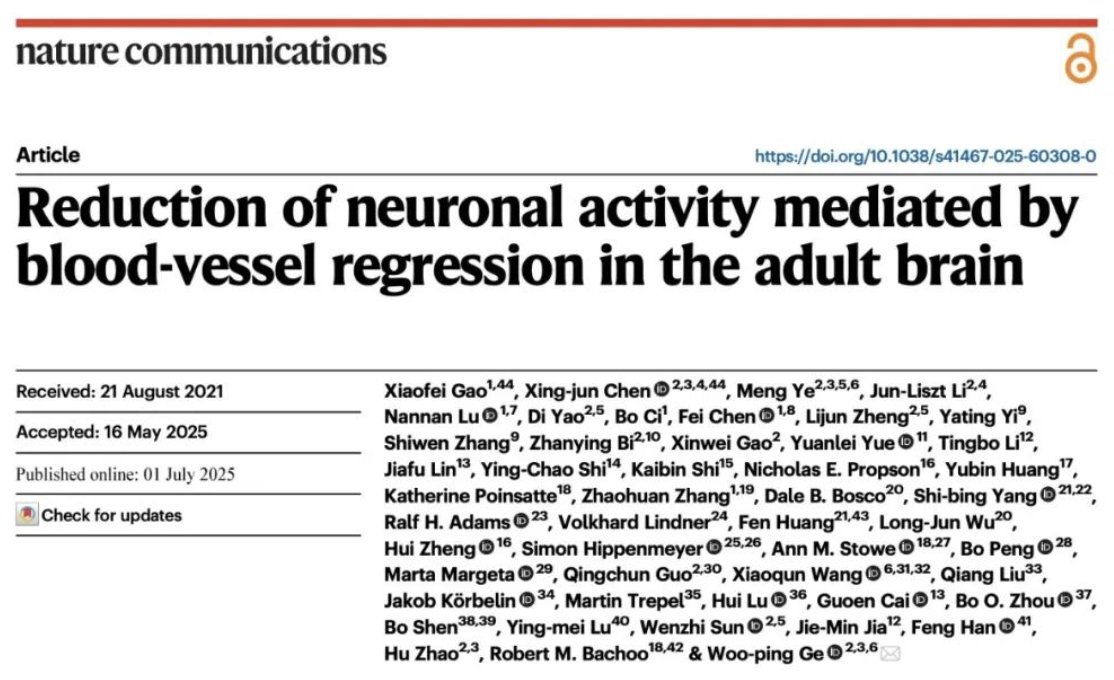
Nature Communications | Reduction of neuronal activity mediated by blood-vessel regression in the adult brain | Woo-ping Ge Lab
Abstract
The brain vasculature supplies neurons with glucose and oxygen, but little is known about how vascular plasticity contributes to brain function. Using longitudinal in vivo imaging, we report that a substantial proportion of blood vessels in the adult mouse brain sporadically occlude and regress. Their regression proceeds through sequential stages of blood-flow occlusion, endothelial cell collapse, relocation or loss of pericytes, and retraction of glial endfeet. Regressing vessels are found to be widespread in mouse, monkey and human brains. We further reveal that blood vessel regression cause a reduction of neuronal activity due to a dysfunction in mitochondrial metabolism and glutamate production. Our results elucidate the mechanism of vessel regression and its role in neuronal function in the adult brain.