CARVE, a unique method for analyzing tumor metabolism in patients, developed by scientists at CIBR
Gliomas are the most common form of brain tumor in adults and the most lethal solid cancer in children younger than 12 years old. Malignant gliomas remain incurable and therefore present several unique challenges for clinicians, radiologists, and translational investigators who aim to improve both diagnosis and prognosis. The targeting of tumor metabolism has re-emerged over the past decade as a viable potential strategy for new cancer therapies. There are several means by which the metabolism of human gliomas have been previously assessed: through the metabolome of plasma collected from the cubital vein; through metabolomics analysis of blood collected from resected cancer tissue or cerebrospinal fluid; through nuclear magnetic resonance (NMR) imaging; and through assessment of isotope enrichment in glioma tissue after intraoperative infusion with 13C-labeled nutrients. To date, however, the direct measurement of consumption and production of metabolites by gliomas in patients has remained extremely technically difficult.
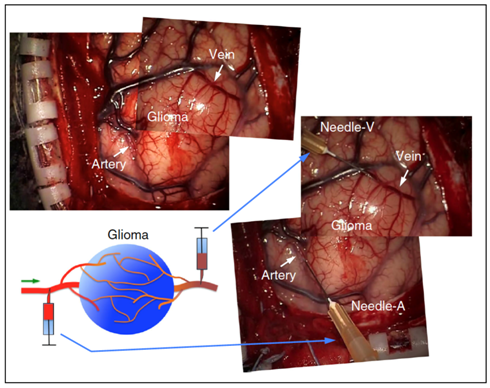
In a recent study published in Nature Communications, the Woo-ping Ge group (woopinglab.org) at CIBR, in conjunction with the Nanxiang Xiong group from Tongji Medical College at Huazhong University of Science and Technology, developed a novel method for paired analysis of Cancer ARterial-VEnous metabolome, or CARVE, to study tumor metabolism directly from patients.
This method is based on the hypothesis that gliomas consume metabolites from the arterial blood in appreciable quantities, and that these metabolites are present at significantly lower concentrations in venous blood downstream of the glioma. Conversely, metabolites produced and secreted by gliomas accumulate in venous blood downstream of the glioma relative to the arterial supply. Through the comparison of plasma metabolomes between the arterial supply and venous drainage, CARVE can be used to exclude interpatient variation and subsequently identify multiple metabolites that are consumed and produced by gliomas in vivo in patients.
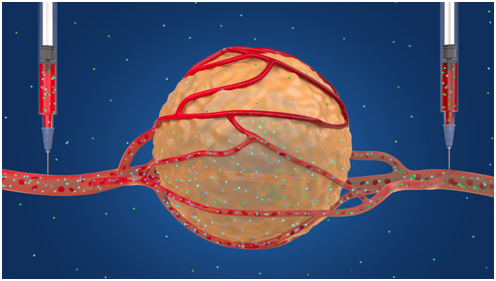
This study represents the first report of the successful collection of blood from an artery and vein specifically upstream and downstream of a tumor in patients for metabolomic analysis to characterize the uptake and consumption of glioma-associated metabolites. In vivo identification of the metabolites or other molecules consumed by gliomas is necessary to fully understand glioma metabolism, and will provide a clear avenue for metabolomic analysis of other cancers in patients or animal models.