
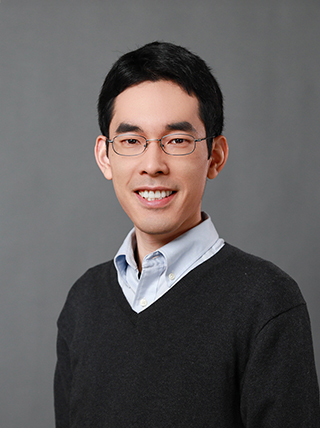
Tatsuo Okubo
2015 Ph.D. in Systems Neuroscience, Massachusetts Institute of Technology (advisor: Dr. Michale Fee)
2008 M.S. in Systems Engineering, The University of Tokyo
2006 B.S. in Systems Engineering, The University of Tokyo
2022-present Senior Research Fellow, Chinese Institute for Brain Research, Beijing
2016-2022 Postdoctoral Fellow, Department of Neurobiology, Harvard Medical School (advisor: Dr. Rachel Wilson)
Neuroscience has entered an exciting stage where large-scale data are collected routinely, for example connectomics, population neural recordings, and behavioral tracking videos. However, analyzing these datasets and obtaining insights from them have become a bottleneck. We are a group at CIBR that aims to tackle this issue using modern data science and machine learning tools. We collaborate with various labs within CIBR to develop models and analysis pipelines to accelerate neuroscience research. While our initial focus will be on neurophysiology and behavioral data given my personal expertise, I plan to expand the scope of our work to include other levels of analysis. Example techniques include (but not limited to) deep learning, probabilistic modeling, computer vision, machine learning on graphs, and reinforcement learning.
Interested individuals are welcome to contact tatsuo.okubo@cibr.ac.cn to discuss positions at all levels (post-docs, students, staff engineers, research assistants).
2023 Artificial Intelligence Professional Certificate (Stanford University)
2020-2022 Warren Alpert Distinguished Scholar
2017-2020 Helen Hay Whitney Fellowship (Helen Hay Whitney Foundation)
2016–2017 Mahoney Postdoctoral Fellowship (Dept. of Neurobiology, Harvard Medical School)
2016 Capranica Prize (International Society for Neuroethology)
2013-2014 Hubert Schoemaker Fellowship (MIT BCS)
2011 Walle Nauta Award for Continuing Dedication to Teaching (MIT BCS)
2010 Angus McDonald Award for Excellence in Undergraduate Teaching (MIT BCS)
2008-2013 The Nakajima Foundation Scholarship (The Nakajima Foundation)
(* denotes equal contributions)
1. Bates AS,..., Okubo TS, Zhang ZY, ..., Lee WA. Distributed control circuits across a brain-and-cord connectome. Nature (2026) 656: 957–970
2. Basnak MA, Kutschireiter A, Okubo TS, Chen A, Gorelik P, Drugowitsch J, Wilson RI. Multimodal cue integration and learning in a neural representation of head direction. Nature Neuroscience (2025) 28: 1729–1740
3. Chen P, Yang H, Zheng X, Jia H, Hao J, Xu X, Li C, He X, Chen R, Okubo TS#, Cui Z#. Group-common and individual-specific effects of structure-function coupling in human brain networks with graph neural networks. Imaging Neuroscience (2024)2: 1–21
4. Schlegel P,..., The FlyWire Consortium (Okubo TS),..., Bock DD, Jefferis GSXE. Whole-brain annotation and multi-connectome cell typing of Drosophila. Nature (2024) 634: 139–152
5. Dorkenwald S,..., Seung HS, Murthy M, The FlyWire Consortium (Okubo TS). Neuronal wiring diagram of an adult brain. Nature (2024) 634: 124–138
6. Mukai Y, Okubo TS, Lazarus M, Ono D, Tanaka K, and Yamanaka A, Prostaglandin E2 induces long-lasting inhibition of noradrenergic neurons in the locus coeruleus and moderates the behavioral response to stressors. J Neurosci (2023) 43(47):7982-7999
7. Okubo TS, Patella P, D’Alessandro, Wilson RI, A neural network for wind-guided compass navigation. Neuron (2020) 107(5): 924-40
8. Lynch GF*, Okubo TS*, Hanuschkin A, Hahnloser RHR, Fee MS. Rhythmic continuous-time coding in the songbird analog of vocal motor cortex. Neuron (2016) 90(4): 877-92
9. Okubo TS, Mackevicius EL, Payne HL, Lynch GF, Fee MS. Growth and splitting of neural sequences in songbird vocal development. Nature (2015) 528(7582):352-7
10. Okubo TS, Mackevicius EL, Fee MS. In vivo recording of single-unit activity during singing in zebra finches. Cold Spring Harb Protoc (2014) 2014(12):1273-83