
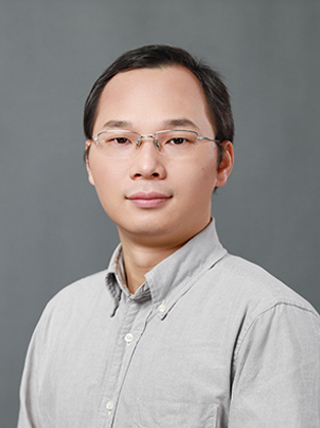
Guang Chen
2009.9-2016.7 Institute of Neuroscience, Chinese Academy of Sciences, Ph.D., Neurobiology
2005.9-2009.7 Shanghai Jiao Tong University, B.S., Biotechnology
2022.10-present Chinese Institute for Brain Research, Beijing, Assistant Investigator
2017.10-2022.8 Department of Neuroscience, Baylor College of Medicine, Postdoctoral Associate
2017.2-2017.10 Neuroscience Institute, New York University, Postdoctoral Fellow
As René Descartes argued that “I think, therefore I am”, the changing thoughts from moment to moment and the driven actions create our existence. The general question we are interested in answering is: how the brain controls cognitive and motor processes? We are living in noisy and dynamically changing complex environments, such that to control cognitive and motor processes properly the brain needs to own several fundamental abilities. For example, firstly, the brain should be able to shield out noises, irrelevant distractors, and perturbations to maintain behaviorally relevant processes stably. Second, the brain should be able to switch from one process to another flexibly to adapt to the dynamic environment. Third, the brain should be able to coordinate different processes parallelly in coping with complex environmental inputs and requirements. Balance and optimization of these fundamental abilities are required for a healthy brain. Deficits of these abilities are frequently observed in many brain diseases, such as Parkinson’s and Alzheimer’s diseases, OCD, Autism, ADHD, and schizophrenia. Our lab is dedicated to dissecting how neural networks are organized and formed to implement these fundamental abilities (in terms of stability, flexibility, and coordination) in cognitive and motor control. We combine quantitative parametric behavior tasks training in mice, large-scale high-resolution electrophysiological recording, two-photon calcium imaging, optogenetic/chemogenetic perturbation, and other molecular tools, machine learning, and computational modeling methods to answer the above questions. Ultimately, we aim to leverage our basic research findings to improve the curing of brain diseases and the study of brain-inspired intelligent computations.
To achieve the above goals, we specifically answer questions along with the following directions:
1. How are multi-regional neural networks across different spatial-temporal scales organized to maintain robust/stable delay activity underlying cognitive and motor functions? Our recent study found that modular organization across frontal cortical hemispheres enhances cognitive robustness (Chen et al., Cell, 2021). We seek to test whether the modular organization with dynamical communication is a general principle for producing robust/stable cognitive/motor functions in noisy and uncertain environments and dissect how this principle is implemented in neural circuits.
2. How are neural networks organized to enable a flexible switch from one task to another in dynamically changing environments when the animal moves from one spatial context to another? How does the brain parallelly coordinate movements of multiple motor effectors?
3. How do different types of neurons or circuit motifs interact to orchestrate diverse dynamical activity (Chen et al., Neuron, 2017) and dynamical communication underlying cognitive and motor control during different states? How do specific circuit interactions/organizations evolve during experience-dependent development, and plastic/learning processes? What are the potential factors that cause individual variation in network organization and cognitive ability?
4. What’s the circuit level mechanism of stability deficits in movement-related disorders, such as Parkinson’s disease and essential tremor? Weather and what kinds of AI-facilitated BMI or neural modulation technologies can modulate circuit state to relive tremors or other diseases’ symptoms?
We use interdisciplinary approaches to answer fundamental questions in system neuroscience. If you study or work in the fields of STEM (science, technology, engineering, and mathematics) or other relevant ones and are interested in our research, please feel free to get in touch with us at chenguang(at)cibr.ac.cn. We have multiple positions available for postdocs and graduate students. You are welcome to join us.

2022 Beijing Nova Program of Science and Technology
2018 Cell Press Paper of the Year 2017, China
1. Thomas, A., Yang, W.G., Wang, C., Tipparaju, S.L., Chen, G., Sullivan, B., Swiekatowski, K., Tatam, M., Gerfen, C., Li, N. (2023). Superior colliculus bidirectionally modulates choice activity in frontal cortex. Nature Communications.
2. Yang, W.G., Tipparaju, S.L., Chen, G., Li, N. (2022). Thalamus-driven functional populations in frontal cortex support decision-making. Nature Neuroscience.
3. Chen, G.*, Kang, B.*, Lindsey, J., Druckmann, S., Li, N. (2021). Modularity and robustness of frontal cortical networks. Cell 184, 1-14. (* equal contribution)
4. Mahrach, A., Chen, G., Li, N., van Vreeswijk, C., and Hansel, D. (2020). Mechanisms underlying the response of mouse cortical networks to optogenetic manipulation. ELife 9.
5. Li, N., Chen, S., Guo, Z.V., Chen, H., Huo, Y., Inagaki, H.K., Chen, G., Davis, C., Hansel, D., Guo, C., Svoboda, K. (2019). Spatiotemporal constraints on optogenetic inactivation in cortical circuits. ELife 8.
6. Chen, G., Zhang, Y., Li, X., Zhao, X.C., Ye, Q., Lin, Y.X., Tao, H.W., Rasch, M.J., and Zhang, X.H. (2017). Distinct Inhibitory Circuits Orchestrate Cortical beta and gamma Band Oscillations. Neuron 96, 1403-1418.e6. (Featured article)
7. Wang, B., Ke, W., Guang, J., Chen, G., Yin, L., Deng, S., He, Q., Liu, Y., He, T., Zheng, R., Jiang, Y., Zhang, X., Li, T., Luan, G., Lu, H., Zhang, M., Zhang, X.H., Shu, Y.S. (2016). Firing frequency maxima of fast-spiking neurons in human, monkey, and mouse neocortex. Frontiers in Cellular Neuroscience 10.
8. Chen, G., Rasch, M.J., Wang, R., and Zhang, X.H. (2015). Experience-dependent emergence of beta and gamma band oscillations in the primary visual cortex during the critical period. Scientific Reports 5.
9. Chen, X.J., Rasch, M.J., Chen, G., Ye, C.Q., Wu, S., and Zhang, X.H. (2014). Binocular input coincidence mediates critical period plasticity in the mouse primary visual cortex. Journal of Neuroscience 34, 2940–2955.