
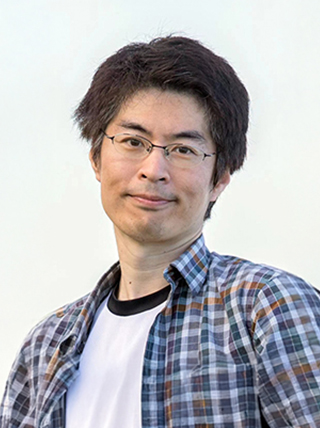
Shogo Ohmae
2008 Ph.D. in Medicine, Juntendo University, Japan (advisor: Dr. Shigeru Kitazawa)
2004 M.D. in Medical Science, Kyoto University, Japan
2024 - Assistant Investigator, Chinese Institute for Brain Research, Beijing
2018 - 2024 Assistant Professor, Department of Neuroscience, Baylor College of Medicine, USA
2015 - 2017 Postdoctoral Associate, Department of Neuroscience, Baylor College of Medicine, USA (Advisor: Javier F. Medina)
2012 - 2015 Postdoctoral Researcher, Department of Psychology, University of Pennsylvania, USA (Advisor: Javier F. Medina)
2009 - 2012 Postdoctoral Researcher, Graduate School of Medicine, Hokkaido University, Japan (Advisor: Masaki Tanaka)
Even the most sophisticated human cognitive functions, such as language processing, needs to be traced back to neural circuits and their computations. However, we currently know very little about the circuit computations behind high-level cognitive functions. To address this gap, we aim to perform large-scale recordings of neuronal activity in the animal brain while the brain processes specific aspects of language. Then, we aim to create AI circuits that imitate the real brain circuits to reproduce the flow and transformation of information in the brain. With this multi-disciplinary approach, we will uncover the computational mechanisms of cognitive processing of the brain in a depth far beyond the current level. I believe that the combination of animal experiments and computer modeling is key to future breakthroughs in neuroscience.
In more detail, we aim to
1) record large-scale neuronal activity from awake behaving animals (mouse/monkey) during cognitive tasks, using high density multi-channel electrodes (Neuropixels) and calcium imaging (Miniscope);
2) create artificial neural network (ANN) models implementing the biological knowledge of brain circuits and functions (input-output) to reveal the computation mechanisms of the brain underlying cognitive processing.
3) deepen our understanding of the pathological mechanisms of neurological disorders, such as autism, that arise from developmental impairments in this network.
4) create brain-like AI circuits and provide inspirations and insights to enhance the development of brain-machine interfaces (BMI) and AI.
Our lab uses such a highly interdisciplinary approach. The first paper from our lab (in Nature Communications, 2024) showcases the potential of this approach. This paper describes the cerebellar ANN model and proposes a framework for a unified understanding of the two language functions of the cerebellum, which were previously thought to be grounded in different mechanisms.
Interested students, scholars, and postdocs are encouraged to contact us to discuss available positions at all levels. Whether your background is in experimental science or AI modeling, your contribution will be greatly appreciated and welcomed. For more information, please reach out to shogo@cibr.ac.cn.
2020 - 2024 Principal Investigator, NIH/NINDS, R34 Planning Grant
2014 - 2015 Japan Society for Promotion of Science (JSPS) Overseas Postdoctoral Fellowship
2013 Uehara Memorial Foundation, Fellowship for Research Abroad
2009 - 2012 JSPS Research Fellowship for Young Scientists, PD
2006 - 2008 JSPS Research Fellowship for Young Scientists, DC2
Selected publications:
1. Ohmae K. Ohmae S.* (2024) Emergence of syntax and word prediction in an artificial neural circuit of the cerebellum. Nature Communications. 15, 927. (Selected for a featured article in Nat Commun)
2. Ohmae S.*, Ohmae K., Heiney S., Subramanian D., Medina J.F.* (2021) A recurrent circuit links antagonistic cerebellar modules during associative motor learning. bioRxiv. [Preprint]
3. Kawato M.†, Ohmae S.†, Hoang H., Sanger T. (2021) 50 years since the Marr, Ito, and Albus models of the cerebellum. Neuroscience. 462:151-174. [Review]
4. Kim O.A., Ohmae S., Medina J.F. (2020) A cerebello-olivary signal for negative prediction error is sufficient to cause extinction of associative motor learning. Nature Neuroscience. 23(12):1550-1554.
5. Ohmae S.*, Kunimatsu J., Tanaka M.* (2017) Cerebellar Roles in self-timing for sub- and supra-second intervals. Journal of Neuroscience. 37(13):3511-3522.
6. Ohmae S.*, Tanaka M.* (2016) Two different mechanisms for the detection of stimulus omission. Scientific Reports. 6:20615.
7. Ohmae S., Medina J.F. (2015) Climbing fibers encode a temporal-difference prediction error during cerebellar learning in mice. Nature Neuroscience. 18(12):1798-803.
8. Ohmae S.*†, Takahashi T.†, Lu X.†, Nishimori Y., Kodaka Y., Takashima I., Kitazawa S.* (2015) Decoding the timing and target locations of saccadic eye movements from neuronal activity in macaque oculomotor areas. Journal of Neural Engineering. 12(3):036014.
9. Ohmae S., Uematsu A., Tanaka M. (2013) Temporally specific sensory signals for the detection of stimulus omission in the primate deep cerebellar nuclei. Journal of Neuroscience. 33(39):15432-41.
10. Ohmae S., Lu X., Takahashi T., Uchida Y., Kitazawa S. (2008) Neuronal activity related to anticipated and elapsed time in macaque supplementary eye field. Experimental Brain Research. 184(4):593-8.
11. Ohmae S., Takemoto-Kimura S., Okamura M., Adachi-Morishima A., Nonaka M., Fuse T., Kida S., Tanji M., Furuyashiki T., Arakawa Y., Narumiya S., Okuno H., Bito H. (2006)Molecular identification and characterization of a family of kinases with homology to Ca2+/calmodulin-dependent protein kinases I/IV. Journal of Biological Chemistry. 281(29):20427-39.
(* denotes corresponding author, † denotes equal contribution)