
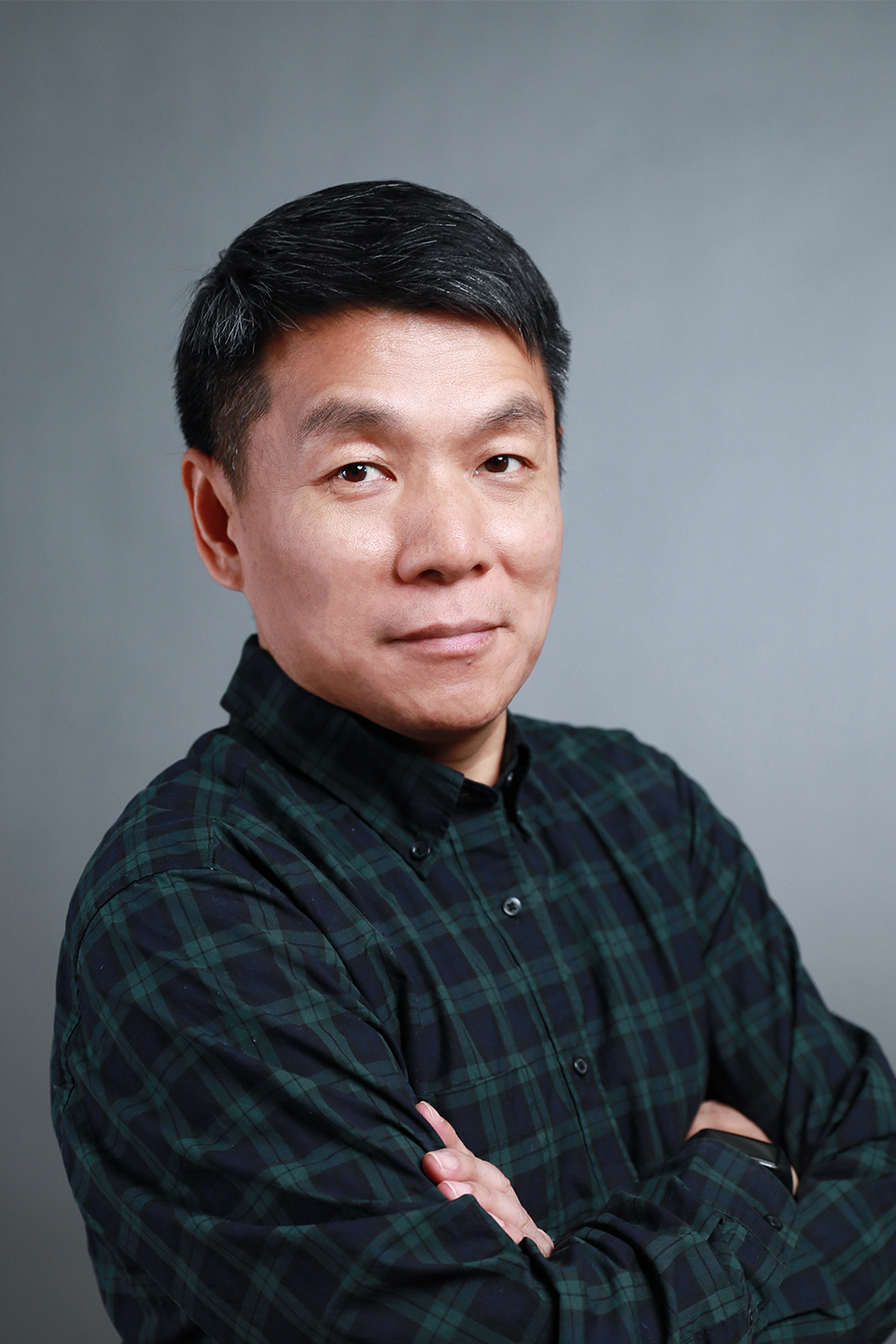
Yihong Ye
Peking University Medical Center:1990-1995、Bachelor of Medicine
University of Pennsylvania: 1995-2000, Ph.D.
2000-2005 Harvard Medical School Postdoctoral fellow
2005-2012 National Institutes of Health Tenure track investigator
2012-2026 National Institutes of Health Senior Investigator
2026-now Chinese Institute for Brain Research Distinguished Investigator
The Ye laboratory is broadly interested in understanding the regulation of protein and organelle homeostasis. Cells maintain homeostasis at the levels of organelles, individual cells, and the organism through tightly controlled protein folding and the efficient clearance of misfolded proteins. Disruption of this balance leads to the accumulation of misfolded proteins and the formation of toxic protein aggregates. These aggregates not only damage the cells in which they arise, but can also propagate between cells in a prion-like manner. During this process, they can compromise membrane integrity and damage organelles such as lysosomes, as well as the plasma membrane. Increasing evidence suggests that the intercellular spread of pathogenic protein species is a key driver of neurodegenerative disease progression.
Our research focuses on elucidating the molecular mechanisms underlying the intercellular transmission of neurotoxic protein aggregates and how this process contributes to membrane damage in lysosomes and other organelles and thus neurodegeneration. We also aim to develop strategies to limit the spread of these toxic species in the brain.
· The main research directions of the laboratory include:
· Investigating how lysosomal membrane damage influences the intercellular spread of α-synuclein, and defining the role of ubiquitin-dependent pathways in lysosomal membrane repair.
· Developing mouse models of Parkinson’s disease based on lysosomal membrane damage and evaluating potential therapeutic interventions.
Elucidating the molecular mechanisms governing the release of α-synuclein aggregates from neurons.
2024-now eLIFE Editor
2023 NCATS Director’s Award
2015-now JBC Editor
2014-2019 Scientific Reports Editor
2014 The NIH APAO Outstanding Scientific Achievement award
2001-2004 Helen Hay Whitney fellowship.
2001 Leukemia & Lymphoma society fellowship, 2001 (award declined)
2014 Finalist, the Larry Sandler award, 42nd Annual Drosophila Research Conference, Washington D.C., 2001
2001 Saul Winegrad MD Outstanding Thesis Award, University of Pennsylvania, 2001
1. Chin, N., Zhang, Q., Zou, J. Cheng, K., Zheng, W. Ye, Y. (2026) Nuclear export governs TDP-43 phase transitions and cytoplasmic aggregation. eLIFE https://elifesciences.org/reviewed-preprints/110172
2. Lee, J., Zou, J., Binti Mazli, W., Chin, N., Jarnik, M., Saidi, L., Xu, Y., Replogle, J., Ward, M., Bonifacino, J., Zheng, W., Hao, L., Ye, Y. (2025) CHIP protects lysosomes from CLN4 mutant-induced membrane damages. Nat. Cell Biol. 27:1465-1481.
3. Chen, R.H., Costa-Filho, A.J., Debnath, J., Galli, T., Ge, L., Goberdhan, D., Guo, W., He, K., Jacob, R., Kang, T., Lee, M.G., Li, L., Lolicato, F., Lu, J., Malhotra, V., Nickel, W., Nikoletopoulou, V., Ogden, S.K., Sagia, G.M., Shao, F., Shi, A., Thery, C., Vérollet, C., Villeneuve, J., Verweij, F., Wang, Y., Wang, J., Wu, S., Ye, Y.*, Yin, H., Yu, L., Zhang, M., Zhang, Y., Zhou, X., Zurzolo, C. (2025) Beyond the secretory pathway: New insights into protein release. Traffic e70022. doi: 10.1111/tra.70022.
4. Ennis, M., Wang, L., Saidi, L., Xu, Y., Ye, Y. (2025) NEMF-mediated CAT tailing facilitates translocation-associated quality control. J. Cell Biology 224 (6): e202408199.
5. Wang, L., Xu, Y., Saidi, L., Fukushige, T., Wang, X., Lee, J.-G., Krause, M., Huang, L., Ye, Y. (2024) Mono-UFMylation promotes misfolding-associated secretion of α-synuclein. Science Adv., 10(11):eadk2542.
6. Zhang, Q, Tang, W.C., Stancanelli, E., Jung, E., Syed, Z., Pagadala, V., Saidi, L., Chen, C.Z., Gao, P., Xu, M., Pavlinov, I., Li, B., Huang, W., Chen, L., Liu, J., Xie, H., Zheng, W., Ye, Y. (2023) Heparan sulfate promotes ACE2 super-cluster assembly to enhance SARS-CoV-2-associated syncytium formation. Nat. Commun., 14(1): 5777. Doi: 10.1038/s41467-023-41453-w.
7. Wang, L., Xu, Y., Yun, S., Yuan, Q., Satpute-Krishnan, P., Ye, Y. (2023) SAYSD1 senses UFMylated ribosome to safeguard co-translational protein translocation at the endoplasmic reticulum. Cell Rep., 42: (1):112028. doi: 10.1016/j.celrep.2023.
8. Lee, J., Xu, Y., Xu, M., Saidi, L., Zheng, W., Ye, Y. (2023) Abnormal sorting of misfolded proteins by neuronal ceroid lipofuscinosis-associated DNAJC5/CLN4 mutants causes lipofuscin accumulation. Autophagy, 4:1-20. doi: 10.1080/15548627.2022.2065618.
9. Wang, P., Ye, Y. (2021) An integrin receptor complex mediates Tau fibril-dependent activation of primary astrocytes. Nat. Commun. 12(1):95. doi: 10.1038/s41467-020-20322-w.
10. Zhang, Q, Chen, Z.C., Swaroop, M., Xu, M., Wang, L., Lee, J., Wang, A.Q., Pradhan, M., Hagen, N., Chen, L., Shen, M., Luo, Z., Xu, X., Xu, Y., Huang, W., Zheng, W., Ye, Y. (2020) Heparan sulfate assists SARS-CoV-2 in cell entry and can be targeted by approved drugs in vitro. Cell Discov. 6(1): 80. doi: 10.1038/s41421-020-00222-5.
11. Zhang, Q., Xu, Y., Lee, J., Jarnik, M., Wu, X., Bonifacino, J.S., Shen, J., Ye, Y. (2020) A Myosin-7B dependent endocytosis pathway mediates cellular entry of α-Synuclein fibrils and polycation-bearing cargos. Proc. Natl. Acad. Sci. USA. 117: 10865-10875.
12. Wang, L., Xu, Y., Rogers, H., Saidi, L., Noguchi, C.T., Li, H., Yewdell, J.W., Guydosh, N., Ye, Y. (2020) UFMylation of RPL26 links translocation-associated quality control to endoplasmic reticulum protein homeostasis. Cell Res. 1: 5-20, doi: 10.1038/s41422-019-0236-6.
13. Xu, Y., Cui, L., Dibello, A., Wang, L., Lee, J., Saidi, L., Lee, J.G., Ye, Y. (2018) DNAJC5 facilitates USP19-dependent unconventional secretion of misfolded cytosolic proteins. Cell Discov. 4:11 doi: 10.1038/s41421-018-0012-7.
14. Lee, J.G., Takahama, S., Zhang, G., Tomarev, S., Ye, Y. (2016) Unconventional secretion of misfolded proteins promotes adaptation to proteasome dysfunction in mammalian cells. Nat. Cell Biol. 18:765-776. doi: 10.1038/ncb3372.
15. Liu, Y., Soetandyo, N., Lee, J.G., Liu, L., Xu, Y., Clemons, W.M. Jr., Ye, Y. (2014) USP13 antagonizes gp78 to maintain functionality of a chaperone in ER-associated degradation. eLIFE, 3:e01369. doi: 10.7554.
16. Christianson, J.C. and Ye, Y. (2014) Cleaning up in the endoplasmic reticulum: ubiquitin in charge. Nat. Struct. & Mol. Biol., 21: 325-335.
17. Lee, J.-G., Soetandyo, N., Baek, K., Ye, Y. (2013) Reversible inactivation of deubiquitinases by reactive oxygen species in vitro and in cells. Nature Commun., 4:1568. doi: 10.1038/ncomms2532.
18. Xu, Y., Cai, M., Yang, Y., Huang, L., Ye, Y. (2012) SGTA recognizes a non-canonical ubiquitin-like domain in the Bag6-Ubl4A-Trc35 complex to promote ER-associated degradation. Cell Rep. 2: 1633-1644.
19. Ramanathan H. N., Ye, Y. (2012) The p97 ATPase associates with EEA1 to regulate the size of early endosomes. Cell Res. 22: 346-359.
20. Wang, Q., Liu, Y., Soetandyo, N., Baek, K., Ramanujan, H., Ye, Y. (2011) A ubiquitin ligase-associated chaperone holdase maintains polypeptides in soluble states for proteasome degradation. Mol. Cell 42: 758-770.
21. Li, W., Tu, D., Li, L., Wollert, T., Ghirlando, R., Brunger, A.T.*, Ye, Y.* (2009) Mechanistic insights into active site-associated polyubiquitination by the ubiquitin conjugating enzyme Ube2g2. Proc. Natl. Acad. Sci. USA. 106, 3722-3727.
22. Ye, Y.* and Rape, M.* (2009) Building polyubiquitin chains: E2 at work. Nat. Rev. Mol. Cell Biol. 11, 755-764.
23. Wang, Q., Mora-Jensen, H., Weniger, M.A., Perez-Galan, G., Wolford, C., Hai, T., Ron, D., Chen, W., Trenkle, W., Wiestner, A.*, Ye, Y.* (2009) ERAD inhibitors integrate ER stress with an epigenetic mechanism to activate BH3 only protein NOXA in cancer cells. Proc. Natl. Acad. Sci. USA. 106, 2200-2205.
24. Li, W., Tu, D., Brunger, A.T., and Ye, Y. (2007) A ubiquitin ligase transfers preformed polyubiquitin chains from a conjugating enzyme to a substrate. Nature 446, 333-337.
25. Ye, Y., Shibata, Y., Kikkert, M., Voorden, S., Weirdz, E., and Rapoport, T.A. (2005) Recruitment of the p97 ATPase and ubiquitin ligases to the site of retro-translocation at the ER membrane. Proc. Natl. Acad. Sci. USA. 102, 14132-14138.
26. Ye, Y., Shibata, Y., Yun, C., Ron, D., and Rapoport, T.A. (2004) A membrane protein complex mediates retro-translocation from the ER lumen into the cytosol. Nature 429, 841-847.
27. Ye, Y., Meyer, H.H., and Rapoport, T.A. (2003) Function of the p97-Ufd1-Npl4 complex in retro-translocation from the ER to the cytosol: dual recognition of non-ubiquitinated polypeptide segments and poly-ubiquitin chains. J. Cell Biol. 162, 71-84.
28. Ye, Y., Meyer, H., and Rapoport, T.A. (2001) The AAA ATPase Cdc48/p97 and its partners transport proteins from the ER into the cytosol. Nature 414, 652-656.
29. Ye, Y., and Fortini, M. E. (1999) Apoptotic activity of wild-type and Alzheimer's disease-related mutant Presenilins in Drosophila. J. Cell Biol. 146, 1351-1364.
30. Ye, Y., Lukinova, N., and Fortini, M. E. (1999) Neurogenic phenotypes and altered Notch processing in Drosophila Presenilin mutants. Nature 398, 525-529.