
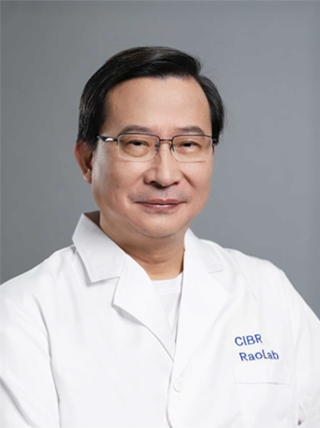
Yi Rao
1985-1991 Ph.D. in Neuroscience, University of California San Francisco
1983-1985 Graduate Student in Pharmacology, Shanghai First Medical College (now Fudan University Shanghai Medical College)
1978-1983 Medical Student, Jiangxi Medical College (now Nanchang University)
Current Positions: Chair Professor, Peking University; Founding Director, PKU-IDG/McGovern Institute for Brain Research; Director Emeritus, PKU-THU Center for Life Sciences; Director Emeritus, Chinese Institutes for Medical Research (CIMR), Beijing.
Past Positions: Vice Chair, Peking University Council (2013-2022); Dean of Sciences, Peking University (2016-2019); Dean of the School of Life Sciences, Peking University (2007-2013); Founding Director, PKU-THU Center for Life Sciences (2011-2021); President, Capital Medical University (2019-2025); Founding Co-Director, Chinese Institute for Brain Research (CIBR), Beijing (2018-2026); Professor, Washington University in St. Louis and Northwestern University (1994-2004).
Joint Appointments: Professor, Department of Chemical Biology, PKU School of Chemistry and Molecular Engineering(2022-); Professor, School of Pharmacy, PKU Medical Center (2021-); Founder of Shenzhen Bay Laboratory and its Institute of Physiology(2019-2024); Professor, Department of Biochemistry, Hong Kong University of Science and Technology(2008-2011); Deputy Director and Senior Investigator, National Institute of Biological Sciences (NIBS), Beijing(2004-2009); Guest Professor, University of Science and Technology of China(2003-2007); Guest Investigator, Institute of Biophysics, Chinese Academy of Sciences(2003-2007); Co-Director, Shanghai Institute for Advanced Studies, Chinese Academy of Sciences(2002-2005); Investigator, Institute for Natural History, Chinese Academy of Sciences(2002-2005); Guest Investigator, Institute of Neuroscience, Chinese Academy of Sciences(1999-2005); Guest Investigator, Shanghai Life Science Center, Chinese Academy of Sciences(1996-1999).
Assistance in the establishment of the Institute of Neuroscience, Chinese Academy of Sciences(1999);
Participation in the establishment of the National Institute of Biological Sciences, Beijing(2004);
Establishment or Joint Establishment of: Shanghai Institute for Advanced Studies, Chinese Academy of Sciences(2002), PKU-THU Center for Life Sciences(2011),PKU-IDG/McGovern Institute for Brain Research(2012); CIBR(2018); CIMR(2023); Shenzhen Bay Laboratory and its Institute of Molecular Physiology.
A Founding Scientist of the Chinese Future Science Award(2016); A Co-Founder of the Science Explorer Award(2018); A Member of the Medical Advisory Board of the Canadian Gairdner International Medical Award (2018-2023).
His UCSF doctoral thesis focused on molecular and genetic analysis of cellular interaction involved in Drosophila neurogenesis, and his postdoctoral research in the Department of Biochemistry and Molecular Biology at Harvard from 1991 to 1994 was on molecular mechanisms of amphibian neural development. From 1994 to 2007, his research at Washington University and Northwestern University was on molecular and cellular mechanisms of neural development, revealing the origin of a single morphogenic field for two eyes, discovering the Slit protein as a chemorepellent for axons, neurons and leukocytes, and studying signal transduction mechanisms for Slit and the chemoattractant netrin.
In 2007, he joined Peking University, and has since studied molecular mechanisms of behaviors and cognition, proposed the concept of chemoconnectome (CCT) (covering neurotransmitters, neuromodulators, neuropeptides and their receptors) and invented chemoconnectomics and related tools. He has used genetics, genomics and functional magnetic imaging to study genes and brain regions important for human cognition. His research ranges from Drosophila (with genetics and molecular biology), frogs (with cell and molecular biology), mice and rats (genetics and neurobiology), monkeys (molecular biology) and humans (genetics and genomics).
His current research uses approaches of biochemistry, chemical biology, molecular biology, genetics and biophysical imaging to study new neurotransmitters, new endogenous ligands for G protein coupled receptors (GPCRs), protein kinases, and other molecules, their involvement in important physiological processes, pathogenesis and implications for the invention of new drugs.
His teaching covers genetics, neurobiology, developmental biology, molecular biology, cell biology and pharmacology. From 2008, he teaches annually Concepts and Approaches in Biology, focusing on classic experiments in biology, tracing their origins and development: genetics from Mendel (1866), Miescher (1871), Morgan (1910), Griffith (1928) to Avery, MacLeod and McCarty (1944),developmental biology from Roux (1888), Spemann and Mangold (1924), Lewis (1978) to Nusslein-Volhard and Wieschaus (1980),neurochemistry from Bernard (1857), Langley (1901), Elliot (1905) to Dale (1910) and Loewi (1921),electrophysiology from Adrian (1912), Hodgkin and Huxley (1939), Katz (1952) to Hubel and Wiesel (1962),and immunology from Behring and Kitasato (1890), Ehrlich (1900), Owen (1945) to Burnet (1959)。
The Rao laboratory at CIBR studies molecular mechanisms of sleep, and molecular mechanisms and treatment for neurodegeneration caused by autoimmunity induced inflammation.
1. Rao Y, Jan LY, and Jan YN (1990). Similarity of the product of the Drosophila neurogenic gene big brain to transmembrane channel proteins. Nature 345:163-167. PDF
2. Rao Y, Vaessin H, Jan LY and Jan YN (1991). Neuroectoderm in Drosophila embryos is dependent on the mesoderm for the positioning but not for formation. Genes Dev 5:1577-1588.
3. Rao Y, Bodmer R, Jan LY and Jan YN (1992). The big brain gene of Drosophila functions to control the number of neuronal precursors in the peripheral nervous system. Development 116:31-40.
4. Rao Y (1994). Conversion of a mesodermalizing molecule, the Xenopus Brachyury gene, into a neuralizing factor. Genes & Dev. 8:939-947.
5. Wu JY, Wen L, Zhang, WJ and Rao Y (1996). The secreted product of Xenopus lunatic fringe, a vertebrate signaling molecule. Science 273:355-358.
6. Li HS, Tierney C, Wen L, Wu JY and Rao Y (1997). A single morphogenetic field gives rise to two retina primordia under the influence of the prechordal mesoderm. Development 124:603-615. PDF
7. Li HS, Chen JH, Wu W, Fagaly T, Yuan WL, Zhou L, Dupuis S, Jiang Z, Nash W, Gick C, Ornitz D, Wu JY, and Rao Y (1999). Vertebrate Slit, a secreted ligand for the transmembrane protein Roundabout, is a repellent for olfactory bulb axons. Cell 96:807-818. PDF
Commentary in Nature W.A. Harris and C.E. Holt PDF
Minireview in Neuron D. Van Vactor and J.G. Flanagan PDF
Minireview in Cell K. Zinn and Q. Sun PDF
8. Wu W, Wong K, Chen JH, Jiang ZH, Dupuis S, Wu JY, and Rao Y (1999). Directional guidance of neuronal migration in the olfactory system by the secreted protein Slit. Nature 400:331-336. PDF
Commentary in Natureby P. Racik PDF
9. Zhu Y, Li HS, Zhou L, Wu JY, and Rao Y (1999). Cellular and molecular guidance of GABAergic neuronal migration from an extra-cortical origin to the neocortex. Neuron 23: 473-485.
10. Yuan W, Zhou L, Chen JH, Wu JY, Rao Y, and Ornitz DM (1999). The mouse Slit family: secreted ligands for Robo expressed in patterns that suggest a role in morphogenesis and axon guidance. Dev. Biol. 212:290-306.
11. He M, Wen L, Campbell C, Wu JY, and Rao Y (1999). Transcription repression by ET, an ortholog of human Tbx3, a gene involved in ulnar-mammary syndrome. Proc Natl Acad Sci USA 96:10212-10217.
12. Chen J, Wu W, Li HS, Fagaly T, Zhou L, Wu JY and Rao Y (2000). Embryonic expression and extracellular secretion of Xenopus Slit. Neuroscience 96:231-236.
13. Chen J, Wen L, Dupuis S, Wu JY, and Rao Y (2001). The N-terminal leucine rich regions in Slit are sufficient to repel olfactory bulb axons and subventricular zone neurons. J Neurosci 21:1548-1556.
14. Hirata T, Fujisawa H, Wu JY, and Rao Y (2001). Independence of short-range guidance for olfactory bulb axons from repulsive factor Slit. J Neurosci 21: 2373-2379.
15. Wu JY, Feng L, Park H-T, Havlioglu N, Wen L, Tang H, Bacon KB, Jiang Z, Zhang X-C, and Rao Y (2001). The neuronal repellent Slit inhibits leukocyte chemotaxis induced by chemotactic factors.Nature 410:948-952. PDF
Commentary in Science by A Fernandis and R. Ganju PDF
16. Wong K, Ren X-R, Huang Y-Z, Xie Y, Liu G, Saito H, Tang H, Wen L, Brady-Kalnay SM, Mei L, Wu JY, Xiong W-C, and Rao Y (2001). Signal transduction in neuronal migration: roles of GTPase activating proteins and the small GTPase Cdc42 in the Slit-Robo pathway. Cell 107:209-221. PDF
17. Sang Q, Wu JY, Rao Y, Hsueh, Y-P, and Tan S-S (2002). Slit promotes branching and elongation of neurites of interneurons but not projection neurons from the developing telencephalon. Mol Cell Neurosci 21:250-65.
18. Zhu Y, Yu T, Zhang X-C, Nagasawa T, Wu JY, and Rao Y (2002). Role of the chemokine SDF-1 as the meningeal attractant for embryonic cerebellar neurons. Nature Neurosci 5:719-720. PDF Supplementary Data
19. Ward M, McCann C, DeWulf M, Wu JY and Rao Y (2003). Distinguishing between directional guidance and motility regulation in neuronal migration. J Neurosci 23:5170-5177.
20. Liu G and Rao Y (2003). Neuronal migration from the forebrain to the olfactory bulb requires a new attractant persistent in the olfactory bulb. J Neurosci 23:6651– 6659.
21. Jin Z, Zhang J, Klar A, Chédotal A, Rao Y, Cepko CL, Bao Z-Z (2003). Irx4-mediated regulation of Slit1 expression contributes to the definition of early axonal paths inside the retina. Development 130: 1037-1048.
22. Yuan W, Rao Y, Babiuk RP, Greer J, Wu JY, and Ornitz DM (2003). A genetic model for a central (septum transversum) congenital diaphragmatic hernia in mice lacking Slit3. Proc Natl Acad Sci USA 100:5217-5222.
23. Wang B, Xiao Y, Ding B-B, Zhang N, Yuan X-B, Gui L, Qian, K-X, Duan S, Chen Z, Rao Y, and Geng J-G (2003). Induction of tumor angiogenesis by Slit-Robo signaling and inhibition of cancer growth by blocking Robo activity. Cancer Cell 4:19-29.
24. DeBellard ME, Rao Y, and Bronner-Fraser M (2003). Dual function of Slit2 in repulsion and enhanced migration of trunk, but not vagal, neural crest cells. J Cell Biol 162:269-279.
25. Park KW, Morrison CM, Sorensen LK, Jones CA, Rao Y, Chien C-B, Wu JW, Urness LD and Li DY (2003). Robo4 is a vascular-specific receptor that inhibits endothelial migration. Dev Biol 261: 251-267.
26. Guan H, Zu G, Xie Y, Tang H, Johnson M, Xu X, Kevil C, Xiong W-C, Elmets C, Rao Y, Wu JY, and Hui Xu H (2003). Neuronal repellent Slit2 inhibits dendritic cell migration and the development of immune responses. J Immunol 171:6519-6526.
27. Zhu Y, Yu T and Rao Y (2004). Developmental regulation of EGL migration through a switch in cellular responsiveness to cerebellar meninges. Dev Biol 267:153-64.
28. Ward ME, Wu JY and Rao Y (2004). Visualization of spatially and temporally regulated N-WASP activity during cytoskeletal reorganization in living cells. Proc Natl Acad Sci USA 101:970-974. PDF
29. Prasad A, Fernandis AZ, Rao Y, and Ganju RK (2004). Slit-3 protein-mediated inhibition of CXCR4-induced chemotactic and chemoinvasive signaling pathways in breast cancer cells. J Biol Chem 279:9115-24.
30. Molle, K. D., Chédotal, A., Rao, Y., Lumsden, A., and Wizenmann, A. (2004). Local inhibition guides the trajectory of early longitudinal tracts in the developing chick brain. Mech. Dev. 121:143-156.
31. Kanellis J, Garcia GE, Li P, Parra G, Wilson CB, Rao Y, Han S, Smith CW, Johnson RJ, Wu JY, Feng L (2004). Modulation of inflammation by Slit protein in vivo in experimental crescentic glomerulonephritis. Am J Pathol 165:341-52.
32. Liu G, Beggs H, Jürgensen C, Park HT, Tang H, Gorski J, Jones KR, Reichardt LF, Wu JY, and Rao Y (2004). Netrin requires the focal adhesion kinase and the Src family kinases to induce axon outgrowth and to attract axons. Nat Neurosci 7:1222-1232. PDF
33. Li W, Lee J, Vikis HG, Lee S-H, Liu G., Aurandt J, Shen T-L, Fearon ER, Guan J-L, Han M, Rao Y, Hong K, and Guan KL (2004). Activation of FAK and Src are receptor proximal events required for netrin signaling. Nat Neurosci 7:1213-1221.
34. Jiang H, Guo W, Liang XH, Y Rao (2005). Both the establishment and the maintenance of neuronal polarity require active mechanisms: critical roles of GSK-3b and its upstream regulators. Cell 120:123-135. PDF
Commentary in Current Biology by Rong Li PDF
35. Ding YQ, Kim JY, Xu YS, Rao Y, and Chen ZF (2005). Ventral migration of early-born neurons requires Dcc and is essential for the projections of primary afferents in the spinal cord. Development 132: 2047-2056.
36. Lin L, Rao Y, Isacson O. (2005). Netrin-1 and slit-2 regulate and direct neurite growth of ventral midbrain dopaminergic neurons. Mol Cell Neurosci 28:547-55.
37. Ward ME, Jiang H, and Rao Y (2005). Regulated formation and selection of neuronal processes underlie directional guidance of neuronal migration. Mol Cell Neurosci 30:378-387.
38. Kim TH, Lee HK, Seo IA, Bae HR, Suh DJ, Wu J, Rao Y, Hwang KG, and Park HT. (2005). Netrin induces down-regulation of its receptor, Deleted in Colorectal Cancer, through the ubiquitin-proteasome pathway in the embryonic cortical neuron. J Neurochem 95:1-8.
39. Li W, Aurandt J, Jürgensen C, Rao Y, and Guan KL (2006).FAK and Src kinases are required for netrin-induced tyrosine phosphorylation of UNC5. J Cell Sci 119:47-55.
40. Werbowetski-Ogilvie TE, Sadr MS, Jabado N, Angers-Loustau A, Agar NYR, Wu J, Bjerkvig R, Antel JP, Faury D, Rao Y, and Del Maestro RF (2006). Inhibition of medulloblastoma cell invasion by Slit. Oncogene 25: 5103-5112.
41. Liu G, Li W, Gao X, Li X, Jurgensen C, Park HT, Shin NY, Yu J, He ML, Hanks SK, Wu JY, Guan KL, and Rao Y. (2007). p130(CAS) is required for netrin signaling and commissural axon guidance. J Neurosci 27:957-68.
42. Guo W, Jiang H, Gray V, Dedhar S, and Rao Y (2007). Role of the integrin-linked kinase (ILK) in determining neuronal polarity. Dev Biol 306:457-468. PDF
43. Lu W, van Eerde AM, Fan X, Quintero-Rivera F, Kulkarni S, Ferguson H, Kim H-G, Fan Y, Xi Q, Li Q-G, Sanlaville D, Andrews W, Sundaresan V, Bi W, Yank J, Giltay JC, Wijmeng C, V.M. de Jong TVM, Feather SA, Woolf AS, Rao Y, Lupsk JR, Eccles MR, Quad BJ, Gusell JF, Morton C, Maas RL (2007). Disruption of ROBO2 is associated with urinary tract anomalies and confers risk of vesicoureteral reflux. Am J Hum Genet 80:616–632.
44. Li X, Gao X, Liu G, Xiong W, Wu J, Rao Y (2008). Netrin signal transduction and the guanine nucleotide exchange factor DOCK180 in attractive signaling. Nature Neuroscience 11:28-35. PDF
45. Zhou C, Rao Y, and Rao Y (2008). A subset of octopaminergic neurons are important for Drosophila aggression. Nature Neuroscience 11:1059-1061. PDF
46. Liu G, Li W, Wang L, Kar A, Guan KL, Rao Y, and Wu JY (2009). DSCAM functions as a netrin receptor in commissural axon pathfinding. Proc Natl Acad Sci USA 106:2951-6.
47. Yuasa-Kawada J, Kinoshita-Kawada M, Rao Y, and Wu JY (2009). Deubiquitinating enzyme USP33/VDU1 is required for Slit signaling in inhibiting breast cancer cell migration. Proc Natl Acad Sci USA 106:14530-14535.
48. Yuasa-Kawada J, Kinoshita-Kawada M, Wu G, Rao Y, and Wu JY (2009). Midline crossing and Slit responsiveness of commissural axons require USP33. Nature Neuroscience 12:1087-1089.
49. Liu Y, Jiang Y, Si Y, Kim J-Y, Chen Z-F, and Rao Y (2011). Molecular regulation of sexual preference revealed by genetic studies of 5-HT in the brain of male mice. Nature 472:95-99. PDF
50. Liu WW, Liang XH, Li YN, Gong JX, Yang Z, Zhang YH, Zhang JX and Rao Y (2011). Social regulation of aggression mediated by pheromonal activation of Or65a olfactory receptor neurons in Drosophila. Nature Neurosci 7:896-902. PDF
51. Masuyama K, Zhang Y, Rao Y, Wang JW (2012). Mapping neural circuits with activity-dependent nuclear import of a transcription factor. J Neurogenet 26:89-102.
52. Zhou C, Huang H, Kim SM, Lin H, Meng X, Chiang A-S, Wang JW, Jiao R, Rao Y (2012) Molecular genetic analysis of sexual rejection: roles of octopamine and its receptor OAMB in Drosophila courtship conditioning. J Neurosci 32:14281-14287. PDF
53. Zhang SS, Liu Y, Rao Y (2013). Serotonin signaling in the brain of adult female mice is required for sexual preference. Proc Natl Acad Sci USA 110:9968-9973. PDF
54. Gasque G, Conway S, Huang J, Rao Y and Vosshall (2013) Small molecule drug screening in Drosophila identifies the 5HT2A receptor as a feeding modulation target. Scientific Reports 3:2120/doi:10.1038/srep02120.
55. Ishimoto H, Wang Z, Rao Y, Wu C-F, Kitamoto T (2013) A Novel Role for Ecdysone in Drosophila Conditioned Behavior: Linking GPCR-Mediated Non-canonical Steroid Action to cAMP Signaling in the Adult Brain. PLoS Genet 9:e1003843. doi:10.1371/journal.pgen.1003843.
56. Zhu ZJ, Wang YY, Cao ZJ, Chen BQ, Cai HQ, Wu YH, Rao Y (2016). Cue-independent memory impairment by reactivation-coupled interference in human declarative memory. Cognition 155:125-13 PDF
57. Qian YJ, Cao Y, Deng BW, Yang G, Li J, Xu R, Zhang D, Huang J and Rao Y (2017). Sleep homeostasis regulated by 5HT2b receptor in a small subset of neurons in the dorsal fan-shaped body of Drosophila. eLife doi.org/10.7554/eLife.26519.001. PDF
58. Chen BQ, Zhu, ZJ, Wang YY, Ding XH, Guo XB, He MG, Fang W, Zhou SB, Zhou Q, Huang AL, Chen TM, Ni DS, Gu YP, Liu JN, Lei H and Rao Y (2018). Nature vs. nurture in human sociality: multi-level genomic analyses of social conformity. J Hum Genet 63:605-619. PDF
59. Zhang X, Yan HM, Huang ZL and Rao Y (2018). Independence of 5HT involvement in sleep and arousal from thermoregulation in mice. Mol Pharmacol 93:657-664.
60. Zhu ZJ, Chen BQ, Yan HM, Fang W, Zhou Q, Zhou SB, Lei H, Huang AL, Chen TM, Gao TM, Chen L, Chen JY, Ni DS, Gu YP, Liu JN, Zhang WX and Rao Y (2018). Multi-level genomic analyses suggest new genetic variants involved in human memory. Eur J Hum Genet 26:1668-1678. PDF
61. Chen BQ, Zhu ZJ, Na R, Fang W, Zhang W, Zhou Q, Zhou SB, Lei H, Huang AL, Chen TM, Ni DS, Gu YP, Liu JN, Fang F and Rao Y (2018). Genomic analysis of visual cognition: perceptual switching and top-down control. J Neurosci 38:9668-9678. PDF
62. Deng BW, Li Q, Liu XX, Cao Y, Li BF, Qian YJ, Xu R, Mao RB, Zhou EX, Huang J and Rao Y (2019) Chemoconnectomics: mapping chemical transmission in Drosophila. Neuron 101:876-893. PDF
63. Dai XHM, Zhou EX, Yang W, WX Zhang and Rao Y (2019). D-Serine promotes sleep through the NMDA receptor in Drosophila melanogaster. Nature Communications 10:1986. PDF
64. Zhu ZJ, Chen BQ, Na R, Fang W, Zhang WX, Zhou Q, Zhou SB, Lei H, Huang AL, Chen TM, Gao TM, Chen L, Ni DS, Gu YP, Liu JN, Chen JY, Rao Y and Fang F (2020). Heritability of human visual contour integration—an integrated genomic study. Eur J Hum Genet 27:1867-1875. PDF
65. Dai XHM, Zhou EX, Yang W, Deng BW, Li Q, Liu XX, Zhang WX and Rao Y (2021). Molecular resolution of a behavioral paradox: sleep and arousal are regulated by distinct acetylcholine receptors in different neurons of Drosophila. Sleep 10, 1093. PDF
66. Liu YX, Wang TV, Cui YF, Gao SX and Rao Y (2022). Biochemical purification uncovers mammalian sterile 3 (MST3) as a new protein kinase for multifunctional protein kinases AMPK and SIK3. J Biol Chem 298:101929. PDF
67. Liu YX, Wang TV, Cui YF, Li CY, Jiang LF and Rao Y (2022). STE20 phosphorylation of AMPK related kinases revealed by biochemical purifications combined with genetics. J Biol Chem 298:101928. PDF
68. Liu ZY, Jiang LF, Li CY, Li CG, Yang JQ, Yu JJ, Mao RB and Rao Y (2022). LKB1 is physiologically required for sleep from Drosophila melanogaster to Mus musculus. Genetics 221: iyac082. PDF
69. Liu Y, Shan L, Liu T, Li J, Chen YC, Sun CH, Yang CJ, Bian XL, Niu YY, Zhang C, Xi JZ and Rao Y (2023) Molecular and cellular mechanisms of the first social relationship: a conserved role of 5-HT from mice to monkeys, upstream of oxytocin. Neuron 111:1468-1685. PDF
70. Jia X, Zhu J, Bian X, Liu S, Yu S, Liang W, Jiang L, Mao R and Rao Y (2023) Importance of glutamine in synaptic vesicles revealed by functional studies of SLC6A17 and its mutations pathogenic for intellectual disability. eLife 12:RP86972 (bioRxiv 2022.10.25.513688). PDF
71. Li Y, Li CG, Liu YX, Yu JJ, Yang JQ, Cui YF, Wang TV, Li CY, Jiang LF, Song ML and Rao Y (2023). Sleep need, the key regulator of sleep homeostasis, is both indicated and controlled by phosphorylation of threonine 221 in salt inducible kinase 3. Genetics 224:iyad136 (bioRxiv 2021.11.06.467421). PDF
72. Bian XL, Zhu JM, XB, Liang WJ, Yu SH and Rao Y (2023). Evidence suggesting creatine as a new central neurotransmitter: presence in synaptic vesicles, release upon stimulation, effects on cortical neurons and uptake into synaptosomes and synaptic vesicles. eLife 12:RP89317 (bioRxiv 2022.12.22.521565). PDF
73. Sun Y, Men W, Fang W, Zhou E, Yang W, Li Z, Zheng H-F and Rao Y (2024). Human genetics of face recognition: discovery of MCTP2 mutations in humans with face blindness (congenital prosopagnosia). Genetics 227:iyae047 (medRxiv 2021.09.27.21263237). PDF
74. Mao R, Yu J, Deng B, Dai X, Du Y, Du S, Zhang WX and Rao Y (2023). Conditional chemoconnectomics (cCCTomics) as a strategy for efficient and conditional targeting of chemical transmission. eLife 12:RP91927 (bioRxiv2023.09.26.559642). PDF
75. Zi ZT and Rao Y (2024). Discoveries of GPR39 as an evolutionarily conserved receptor for bile acids and of its involvement in biliary acute pancreatitis. Sci Adv 10:eadj0146.PDF
76. Yang WW, Shi JY, Li CG, Yang JQ, Yu JJ, Huang J and Rao Y (2024). Ca2+/calmodulin-dependent kinase II α and β b differentially regulate mammalian sleep. Comm Biol 8:11 (bioRxiv 2024.11.17.624045). PDF
77. Yu J, Wang TV, Gao R, Li CG, Liu HJ, Yang L, Liu YX, Cui YF, Chen RP and Rao Y (2025). Calcineurin: an essential regulator of sleep revealed by biochemical, chemical biological, and genetic approaches. Cell Chem Biol 32:1-17 (bioRxiv 2023.06.19.545643). PDF
78. Wang C, Zhang X, Mao HY, Xian Y and Rao Y (2025). Development of a genetically encoded sensor for intracellular arginine. ACS Sensors 10:1260-1269. PDF
79. Li L, Fang S, Li X, Liu J, Lu W, Li Q, Chang J, Yuan Y, Fang B, Wang Y, Rao Y, Yang H and Dai Y (2025). A new strategy to reduce human influenza infection: creating pigs with partial resistance to influenza A virus infection by targeting ST6GAL1 and ST3GAL4 genes. J Biomed Res 39:1-15.
80. Xia B, Zhu C and Rao Y (2026). Targeting Warburg effect: involvement of lactate transporter MCT1 and its chaperone in cancer cell killing by 18 β-glycyrrhetinic acid. Biochem Biophy Res Commun 809:153492. PDF
81. Liu YX, Li Y, Yu TH, Wang TV, Cui YF, Zhu C, Jia XB, Li CG, Shen YX, Wang Z, Liu SC, Huang J and Rao Y (2026). Discovery of MARK2 as a physiological kinase for PER2 in the mammalian clock. Cell Chem Biol 33:379-395. PDF
82. Huang YY, Zi ZT, Xia CL and Rao Y (2026). GPR39-mediated molecular signaling by bile acids. J Biol Chem 302:111241. PDF