
Kick-off Meeting Held for National Major Science and Technology Projects in Brain Science and Brain-Inspired Research
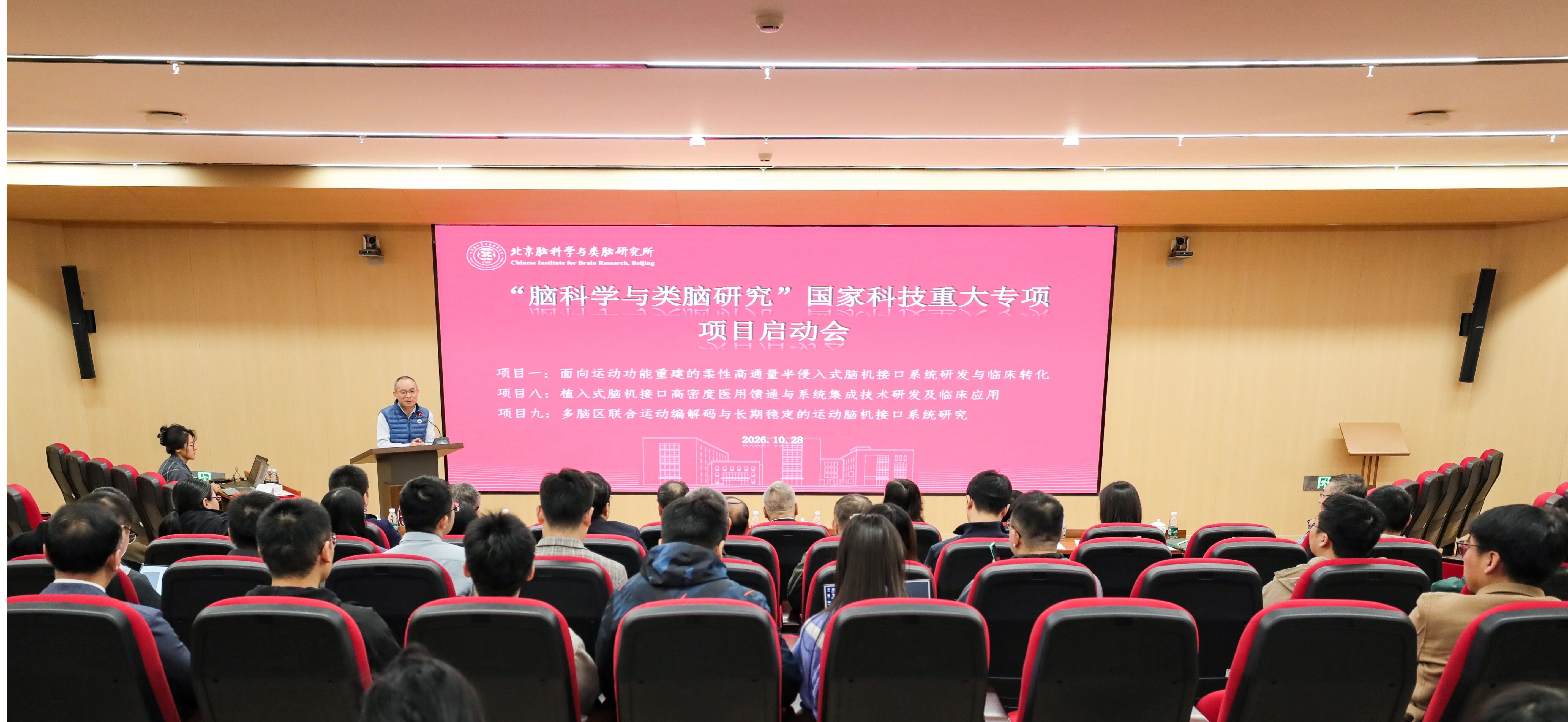
On October 28, 2026, the kick-off meeting for three National Major Science and Technology Projects under the Brain Science and Brain-Inspired Research initiative, undertaken by the Chinese Institute for Brain Research, Beijing (CIBR), was successfully held. The meeting was attended by Yang Liexun, Deputy Director of the High Technology Research and Development Center of the National Natural Science Foundation of China (NSFC); Tang Jian, Second-Level Inspector of the Beijing Municipal Science and Technology Commission and the Administrative Commission of Zhongguancun Science Park; Zhao Jizong, Member of the Chinese Academy of Sciences and Professor at Beijing Tiantan Hospital, Capital Medical University; Hong Bo, Head of the Brain-Computer Interface (BCI) Division and Chief Scientist at Lingang Laboratory; Li Chengyu, Director of the Department of BCI Technology and Engineering at Lingang Laboratory and Chief Scientist; Duan Feng, Vice Dean of the School of Medicine and Professor at the College of Artificial Intelligence, Nankai University; Mao Ying, President of Huashan Hospital, Fudan University; Wang Yueming, Qiushi Distinguished Professor at the College of Computer Science and Technology, Zhejiang University; as well as other experts, project team members, and institutional representatives. The meeting was chaired by Luo Minmin, Director of CIBR.
CIBR has been awarded three projects under the 2026 National Major Science and Technology Projects in Brain Science and Brain-Inspired Research. These include: “Development and Clinical Translation of a Flexible, High-Throughput Semi-Invasive Brain-Computer Interface System for Motor Function Restoration,” led by Professor Luo Minmin; “Development of High-Density Medical Feedthroughs and System Integration Technologies for Implantable Brain-Computer Interfaces and Their Clinical Applications,” led by Professor Zhang Lei; and “Multi-Brain-Region Joint Motor Encoding and Decoding and the Development of a Long-Term Stable Motor Brain-Computer Interface System,” led by Professor Cui He.
Tang Jian, Second-Level Inspector of the Beijing Municipal Science and Technology Commission and the Administrative Commission of Zhongguancun Science Park, noted that the launch of these projects represents a comprehensive assessment of CIBR's research achievements and capacity for tackling key scientific and technological challenges. He expressed the hope that the three projects would become important milestones in CIBR's development. He reaffirmed Beijing's continued commitment to supporting the development of new-type research institutions, exploring innovative models for BCI research, development, and commercialization, and facilitating the translation of more landmark scientific and technological achievements into practical applications in Beijing.
Yang Liexun, Deputy Director of the High Technology Research and Development Center of NSFC, emphasized that the lead institution and project teams should strengthen their sense of responsibility, maintain a clear focus on the objectives of the national initiative, enhance risk awareness, and strive to deliver original and landmark scientific and technological achievements.
Luo Minmin, Director of CIBR, stated that CIBR fully recognizes the honor and responsibility of serving as the implementing institution for these projects. He emphasized that CIBR would fulfill its responsibilities as the legal entity undertaking the projects by strengthening institutional and governance frameworks, ensuring the provision of necessary supporting resources, and coordinating its strengths to deliver comprehensive support. CIBR would also reinforce overall coordination and collaboration, actively seek guidance from the relevant professional management agencies, and bring together all participating institutions to ensure effective cooperation across project components. In addition, CIBR would uphold rigorous standards of research management, ensure the proper management and use of research funds, strictly adhere to research ethics and scientific integrity requirements, and complete data submission and archival documentation, thereby providing a solid foundation for the delivery of high-quality research outcomes.
The three project leaders subsequently presented their respective research objectives, assessment criteria, implementation plans, and project timelines. Their presentations highlighted the key scientific questions to be addressed, core technological approaches, pathways toward clinical translation, and mechanisms for coordination among individual research tasks. Following the presentations, participating experts provided detailed feedback and recommendations on research priorities, the feasibility of proposed technical approaches, inter-institutional collaboration mechanisms, optimization of implementation plans, and the assessment of anticipated outcomes. The project teams stated that they would carefully consider and incorporate the experts' recommendations, further refine their implementation plans, and strengthen milestone-based management to ensure the high-quality execution of the projects.
In his concluding remarks, Zhao Jizong, Academician of the Chinese Academy of Sciences and Head of the Technical Advisory Expert Group, expressed his expectations for the three projects. He encouraged all project teams to advance their work in a rigorous and systematic manner and strive to achieve tangible progress, expressing his hope that preliminary results would be available by the following year.
The successful convening of the kick-off meeting marks the full commencement of the implementation phase of CIBR's three National Major Science and Technology Projects in Brain Science and Brain-Inspired Research. Their implementation is expected to drive innovation in semi-invasive BCI systems, feedthrough technologies, and motor control, while providing critical support for strengthening China's capabilities in BCI research and development and clinical translation.
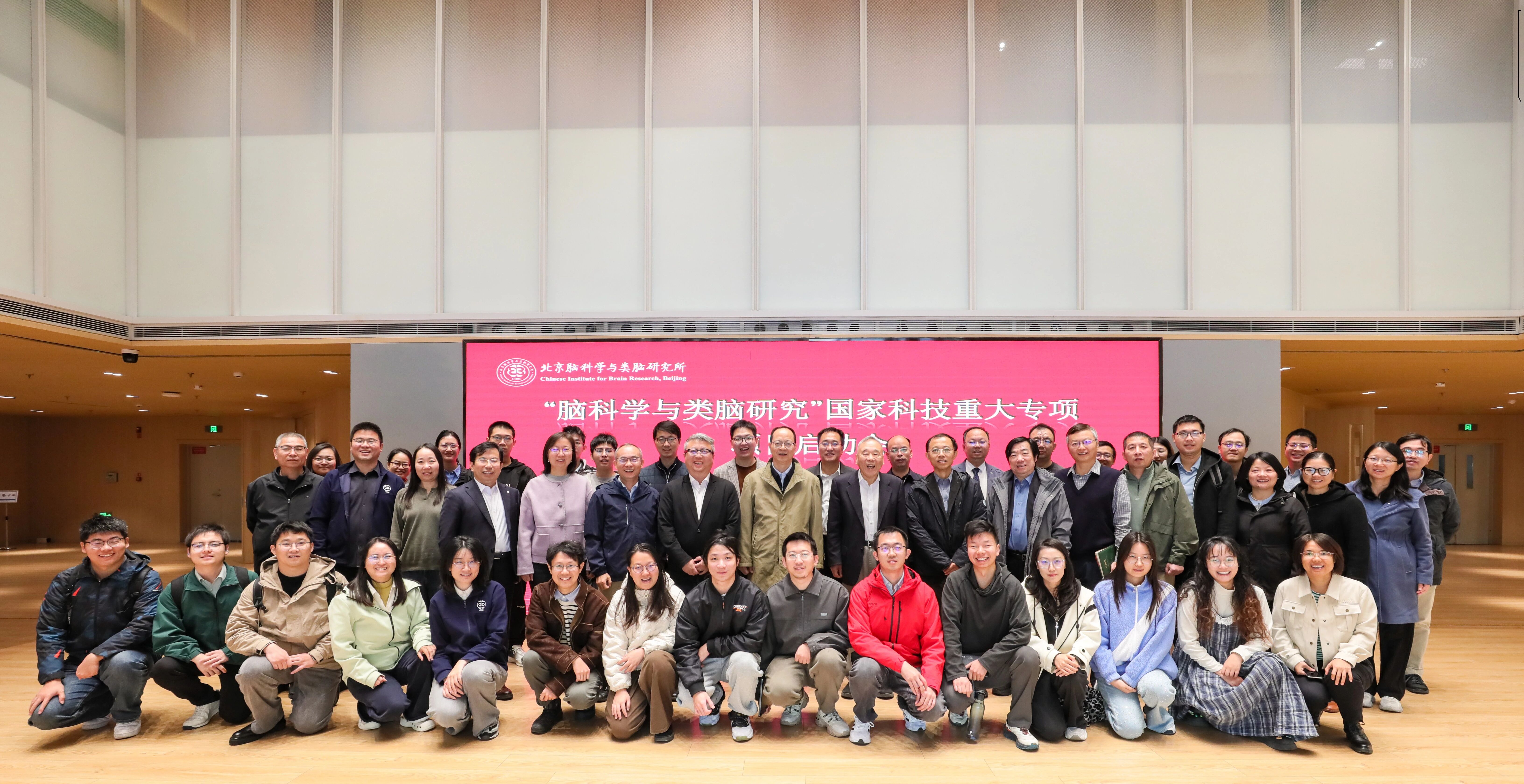
A total of 17 institutions participated in the meeting as lead or collaborating organizations across the project tasks. These included Beijing Xinzhida Neuroscience Technology Co., Ltd.; the National Institutes for Food and Drug Control; Beijing Institute for Medical Device Testing (Beijing Medical Biological Protective Equipment Testing and Research Center); Shanghai Institute of Medical Device Testing; Beijing Tiantan Hospital, Capital Medical University; Peking University First Hospital; Shandong University; Zhejiang University; Beijing Institute of Technology; the Institute of Biophysics, Chinese Academy of Sciences; and Beijing Pins Medical Co., Ltd., among others.