
“Beinao-1” Selected for China’s First Batch of Major Application Scenario Projects
On October 20, the application scenario project titled “Rehabilitation of Motor Function in Patients with Paralysis through the ‘Beinao-1’ Intelligent Brain–Computer Interface”, jointly implemented by the Chinese Institute for Brain Research, Beijing (CIBR) and Beijing Xinzhida Neurotechnology Co., Ltd., was selected for the first batch of 136 nationally designated landmark major application scenario projects announced by the National Development and Reform Commission and other government departments.
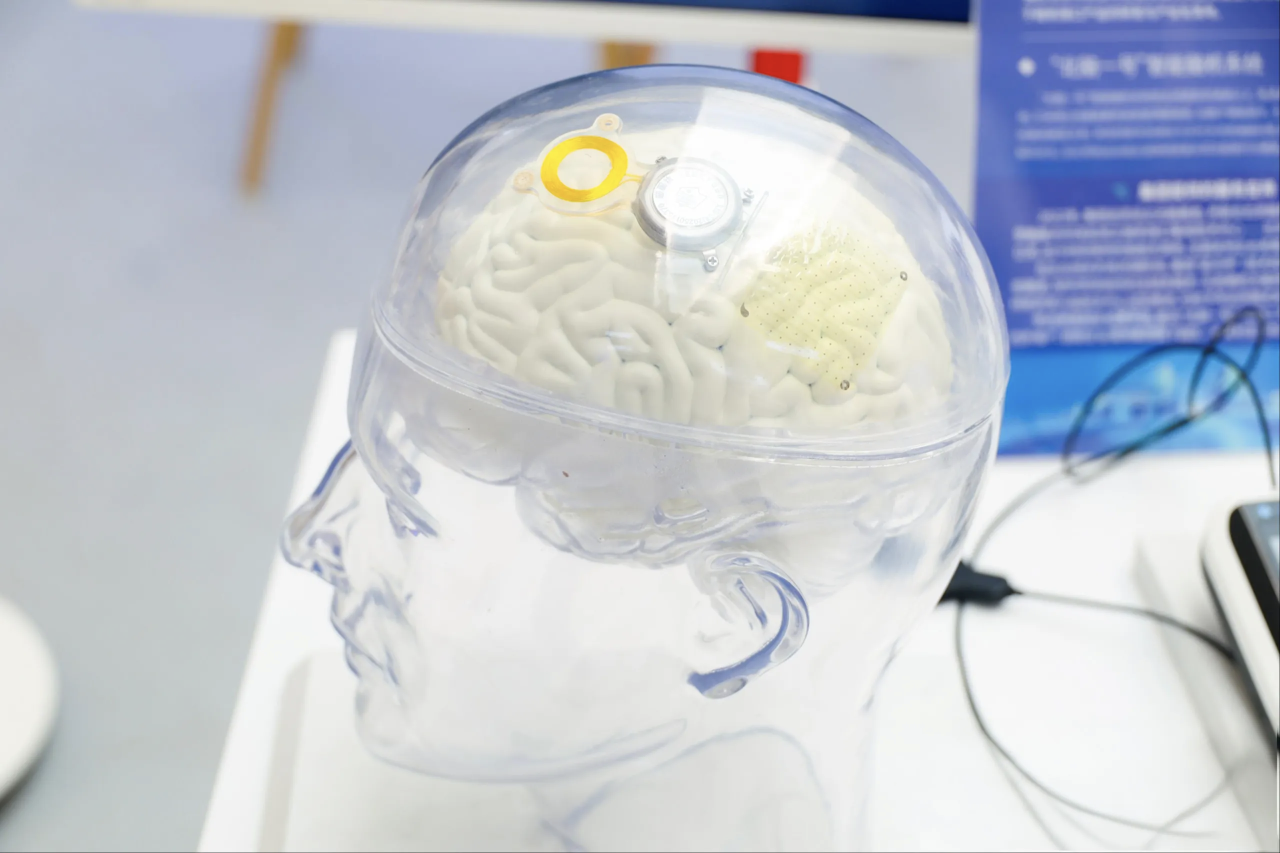
Built on the “Beinao-1” intelligent brain–computer interface (BCI) system, the project integrates internationally advanced technologies, including high-density flexible electrodes, neural signal acquisition and processing, and neural decoding algorithms. It has resulted in the world’s first clinical-stage, semi-invasive BCI system featuring more than 100 channels, high-throughput performance, and a fully implantable wireless design. The project has also established a three-stage, multicenter, closed-loop validation framework, progressing from technology finalization to clinical demonstration and large-scale application. This approach enables the transition from proof of principle to clinical implementation, establishing a demonstration scenario for cutting-edge BCI technologies. Related achievements have been recognized among the Top 10 Science and Technology Progress News Stories in China and the World for 2025, selected by members of the Chinese Academy of Sciences and the Chinese Academy of Engineering, and featured among the major achievements presented at the 2025 and 2026 Zhongguancun Forum.
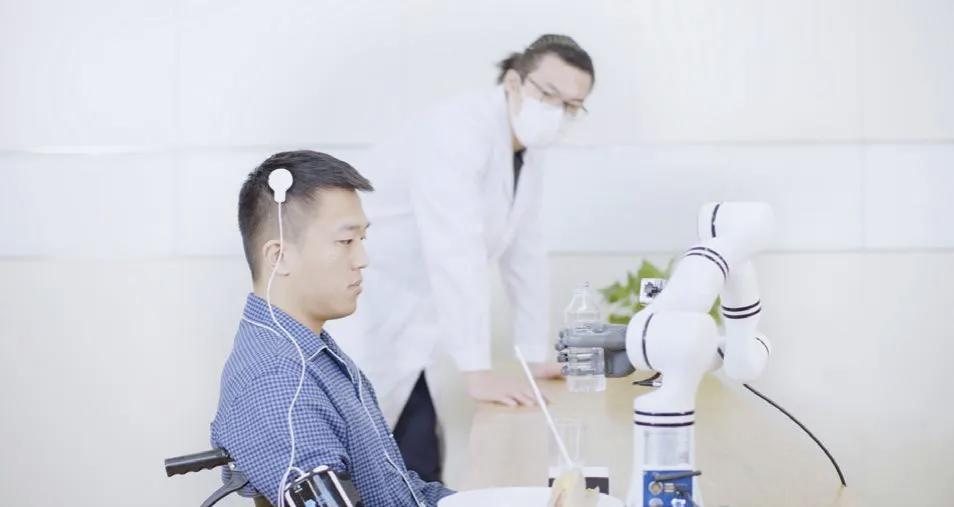
To date, “Beinao-1” has been implanted in more than 44 human participants, with the longest implantation period exceeding 20 months and cumulative safe operating time in humans surpassing 170,000 hours. The system has demonstrated stable performance. Enrollment of all participants in the registration clinical trial has been completed, and an application for medical device registration is planned for 2027. The project is steadily advancing toward the development of a medical device that can be replicated, widely deployed, and brought to market. Following commercialization, the system is expected to support large-scale clinical application.