
“Beinao No.1” Selected for the “Top Ten Scientific and Technological Advances in China in 2025” as Chosen by Academicians of the Two National Academies
On January 26, the "2025 China Top Ten Scientific and Technological Advances" and the "World Top Ten Scientific and Technological Advances" were announced in Beijing. The selection was organized by the Chinese Academy of Sciences and the Chinese Academy of Engineering, hosted by the Bureau of Academic Divisions of the Chinese Academy of Sciences and China Science Daily, and determined through voting by academicians of both academies. Among the selected achievements, the news item “‘Beinao No. 1’ Completes the First Batch of Fully Implanted Wireless Human Applications” was included in the list of China Top Ten Scientific and Technological Advances.
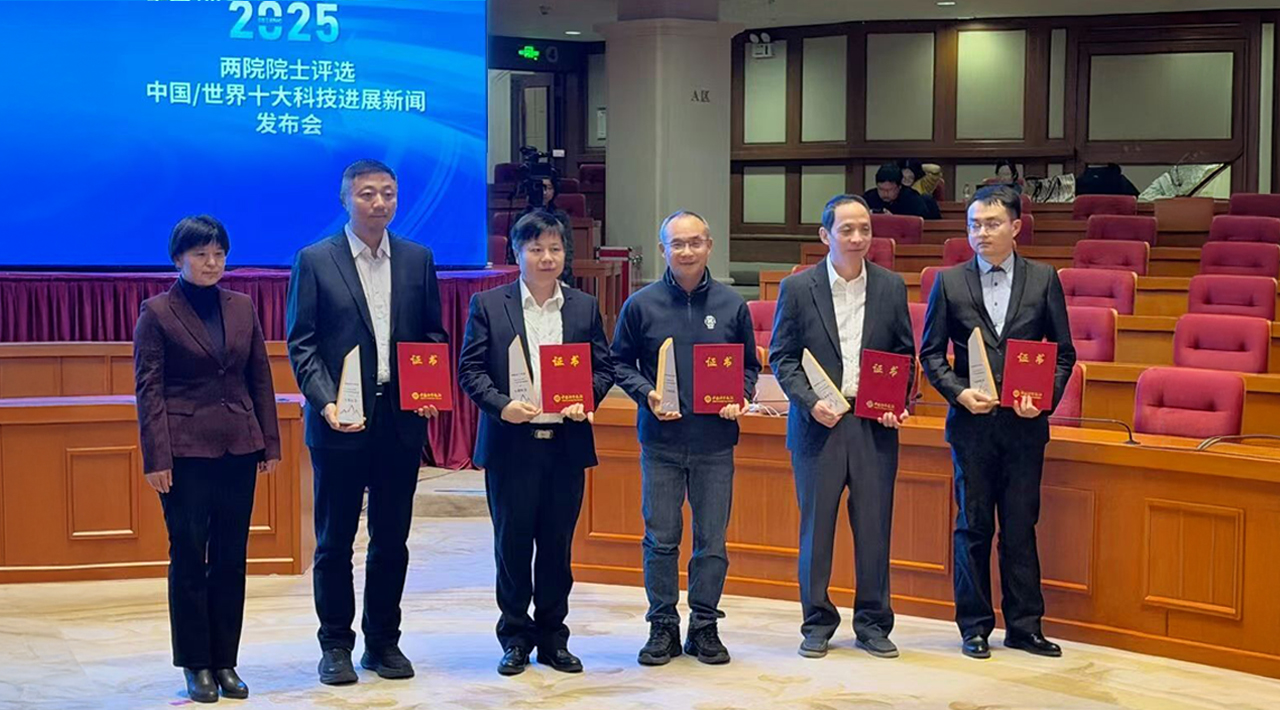
The activity “Academicians of the Two Academies Select China/World Top Ten Scientific and Technological Advances” has been held consecutively for 32 years. It aims to systematically showcase the most representative and influential scientific and technological breakthroughs of each year, enhance public understanding of domestic and international scientific developments, and promote the dissemination and popularization of scientific and technological innovation.
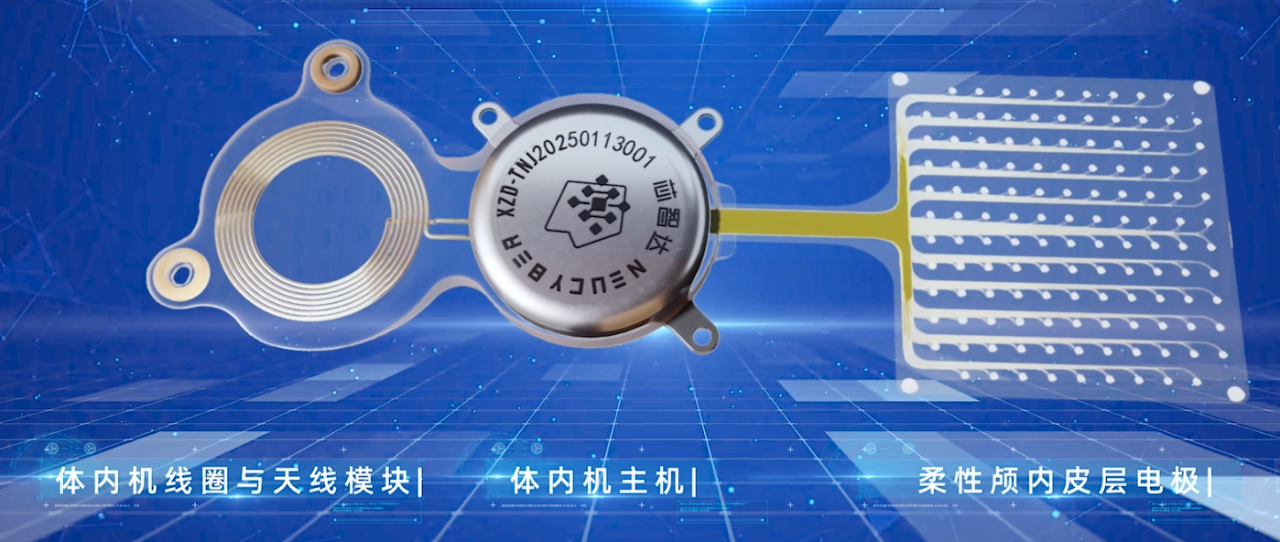
The “Beinao No. 1” Intelligent Brain–Computer Interface System
The “Beinao No. 1” intelligent brain–computer interface (BCI) system was jointly developed by the Beijing Institute for Brain Sciences and Brain-Inspired Intelligence and Beijing Xinzhida Neural Technology Co., Ltd. The system innovatively adopts a high-throughput, semi-invasive technical approach, enabling high-quality neural signal acquisition through 128-channel flexible electrodes while significantly reducing the surgical risks associated with traditional fully invasive solutions.
The system has achieved major breakthroughs in real-time decoding of Mandarin speech and has successfully assisted patients with spinal cord injury and amyotrophic lateral sclerosis (ALS) in substituting and reconstructing motor and speech functions, demonstrating remarkable therapeutic outcomes. To date, “Beinao No. 1” has been successfully implanted in six patients. Through brain-controlled spinal cord electrical stimulation devices combined with lower-limb rehabilitation exoskeleton training, one patient with paraplegia has achieved autonomous walking with the assistance of axillary crutches.
At present, a GCP-compliant, multicenter clinical trial of “Beinao No. 1” is being conducted in collaboration with more than ten leading hospitals nationwide, including Tiantan Hospital, Xuanwu Hospital, and Huashan Hospital.